The Babalon Working — Level 3
The Babalon Working
In January 1946, Jack Parsons and L. Ron Hubbard began a series of rituals. Parsons recorded what happened next as an operation intended to invoke Babalon.
January 1946
On January 4, 1946, Jack Parsons began what he would later record as a magical experiment.
This was not an event reconstructed decades later solely from rumor. Parsons left behind a written account describing the operation, its purpose, its progression, and what he believed occurred during it.
The first objective was specific.
Parsons sought to invoke what he described as an “elemental”—a woman whose appearance would signal the completion of the opening phase of the operation.
Parsons performed a series of ceremonial workings over multiple nights. His methods drew heavily from the occult systems he had spent years studying, including techniques associated with Enochian magick and Aleister Crowley's Thelema.
And beside him was the man introduced in the previous level.
L. Ron Hubbard—the Scribe.
Their roles were different.
Parsons conducted the ritual work.
Hubbard's role included acting as Scribe during portions of the operation—observing, recording, and participating in the process Parsons believed was unfolding.
Parsons' surviving account describes nights of invocations, intense concentration, unusual impressions, and events that he interpreted through his magical worldview.
None of that establishes that anything supernatural occurred.
But it establishes something almost as important to this file:
Parsons believed the experiment was producing results.
And after the first phase ended, something happened that would dramatically strengthen that belief.
Evidence
THE RECORD SURVIVED
Jack Parsons left behind a written record of the operation.
The surviving material includes The Book of Babalon, also known as Liber 49, along with correspondence connected to the events of 1946.
The historical importance of these documents is significant: the Babalon Working is not known solely through later occult folklore. Scholars have been able to examine surviving material attributed to Parsons himself.
Letters and a typescript copy of The Book of Babalon are preserved in the Gerald Yorke Collection at the Warburg Institute, University of London.
Parsons' account describes the operation as a magical experiment involving the invocation of an elemental and, afterward, the force he called BABALON.
documented
DOCUMENTARY SOURCE: Jack Parsons, The Book of Babalon / Liber 49, 1946.
ARCHIVAL PROVENANCE: Typescript and related Parsons correspondence identified in the Gerald Yorke Collection, Warburg Institute, University of London.
SCHOLARLY SOURCE: Henrik Bogdan, “The Babalon Working 1946: L. Ron Hubbard, John Whiteside Parsons, and the Practice of Enochian Magic,” Numen 63 (2016), 12–32. DOI: 10.1163/15685276-12341406.
The Nights of the Working
As the operation continued through January 1946, Parsons recorded experiences that he interpreted as signs that the ritual was progressing.
His account describes periods of intense wind, unusual sounds, physical disturbances, and impressions experienced during the workings. Hubbard also appears in the record as the Scribe, with Parsons attributing observations and visionary experiences to him during portions of the operation.
To an outside observer, none of these events demonstrates supernatural contact. Weather, expectation, altered states, ritual intensity, and later interpretation all remain possible explanations.
Parsons, however, was not writing as an outside observer.
He believed something was responding.
Evidence
“IT IS DONE.”
During the January phase of the operation, Parsons eventually recorded that he believed the objective had been accomplished.
The significance of that declaration becomes clearer when compared with the purpose he had established at the beginning: Parsons was attempting to attract an elemental, represented in his magical framework by a particular woman.
He believed the first phase had succeeded.
And shortly afterward, a woman entered his life.
Her name was Marjorie Cameron.
documented
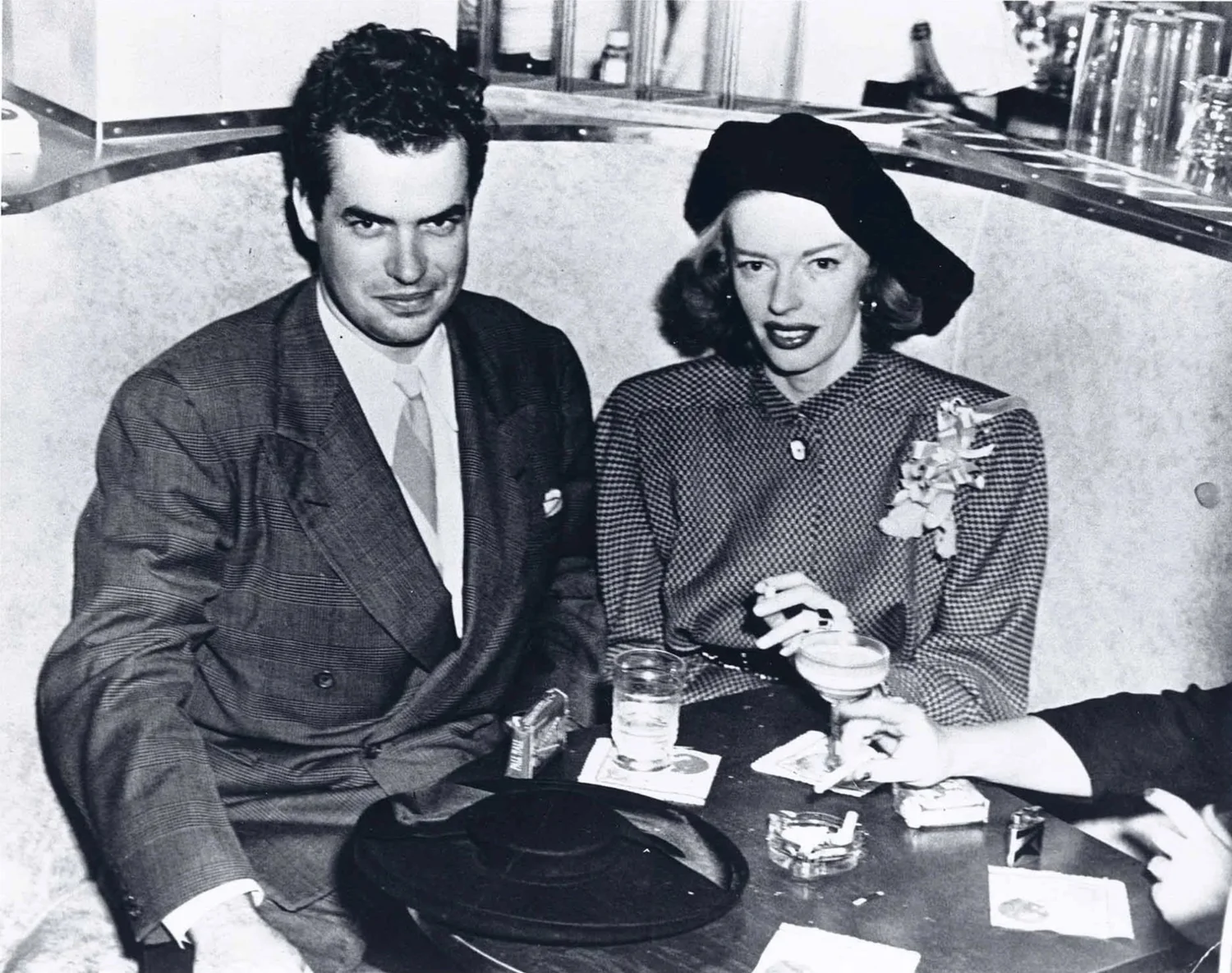
IMAGE SOURCE: Cameron Parsons Foundation
IMAGE IDENTIFICATION: Jack Parsons and Marjorie Cameron
PROVENANCE: Cameron Parsons Foundation, established to preserve and bring attention to the artworks and writings of Marjorie Cameron and Jack Parsons.
NOTE: The Foundation page identifies the subjects but does not provide a date for this specific photograph; no date is assigned here.
The Woman Parsons Was Waiting For
Shortly after Parsons recorded that the first phase of the operation was complete, Marjorie Cameron entered his life.
Cameron was an artist and former U.S. Navy service member who had returned to Southern California after the war.
Parsons did not encounter her as a neutral observer.
He interpreted her arrival through the magical framework he had already built around the Working.
In his surviving account, Parsons described finding a woman who he believed “answered the requirements” of the elemental he had been attempting to attract.
That statement matters because it shows how Parsons himself connected Cameron to the operation.
It does not establish that the ritual caused her appearance.
But in Parsons' mind, the first objective had been fulfilled.
Cameron soon became far more than evidence of a completed first phase.
Parsons came to associate her with Babalon—the divine feminine figure at the center of the larger magical operation he was attempting to perform.
The Working was no longer only about attracting an elemental.
Parsons now believed he was moving toward something more ambitious:
an invocation connected directly to Babalon.
And the written record was about to become stranger still.
Because in the next phase, Parsons would claim that instructions began arriving through the Scribe.
Evidence
“RON — THE SEER”
On March 6, 1946, two days after the final phase of the Working, Parsons wrote to Aleister Crowley about what he believed had occurred.
Parsons described the experience as the most important and devastating of his life.
Then he identified the person through whom he believed the initial instructions had been received:
“First instructions were received through Ron [Hubbard] — the Seer.”
Parsons told Crowley that he had followed those instructions and believed the operation involved a “desire for incarnation.”
Whatever the explanation for the experiences themselves, Parsons' letter establishes something extraordinary about his state of mind by March 1946:
He did not believe the Babalon Working had failed.
He believed something had answered.
documented
DOCUMENTARY SOURCE: John W. Parsons to Aleister Crowley, March 6, 1946.
ARCHIVAL PROVENANCE: Parsons correspondence identified in the Gerald Yorke Collection, Warburg Institute, University of London.
SCHOLARLY SOURCE: Henrik Bogdan, “The Babalon Working 1946: L. Ron Hubbard, John Whiteside Parsons, and the Practice of Enochian Magic,” Numen 63 (2016), 12–32.
Crowley Wasn't Convinced
Aleister Crowley did not respond to Parsons' claims with unquestioning enthusiasm.
His surviving correspondence shows increasing concern about what Parsons and Hubbard were doing—and particularly about Parsons' willingness to interpret extraordinary experiences as evidence of magical success.
On March 27, 1946, Crowley warned Parsons about his tendency to overestimate the significance of his experiences.
By April, Crowley's private correspondence with O.T.O. figure Karl Germer had become considerably more dismissive. He mocked the situation surrounding Parsons and Hubbard and questioned the judgment behind it.
That disagreement leaves us with two very different interpretations from inside the same occult network.
Parsons believed he had achieved contact.
Crowley was not convinced.
Evidence
THE OPERATION DIDN'T END IN JANUARY
The first phase of the Babalon Working began in January 1946, but Parsons' surviving record extends beyond the arrival of Marjorie Cameron.
Scholarly reconstruction of the documents places the final phase of the Working on March 2–4, 1946.
During this period, Hubbard again appears as the Scribe, while Parsons recorded material that he interpreted as communication connected directly with Babalon.
The resulting text became known as Liber 49 — The Book of Babalon.
Parsons did not treat it as fiction.
He believed he had received something
documented
And that is where the evidence forces this Rabbit Hole to split in two.
One path is historical.
Jack Parsons existed. His rocket work existed. Agapé Lodge existed. L. Ron Hubbard lived within his orbit. The rituals occurred. Parsons documented them. His correspondence with Crowley survived.
The other path is something entirely different.
What did Parsons think had answered him?
Because after the Working, he did not simply write that the experiment was successful.
He produced a text he associated with Babalon, described what he believed were communications, and began interpreting what had happened as part of something much larger.
And decades later, other people would take Parsons' interpretation somewhere even darker.
Level Cliffhanger
Parsons believed the operation had worked. Then a woman appeared whom he identified with what the ritual had called for—and the writings that followed suggest he believed the experiment had moved beyond invocation into something far more consequential.
The rabbit hole continues
Descend to Level 4 →