They Found Each Other Online — Level 3
The Highway North
A traffic stop near the Canadian border was about to turn a California story into something much larger.
THE STOP ON INTERSTATE 91
On January 20, 2025, a U.S. Border Patrol agent stopped to check on a vehicle along Interstate 91 in Coventry, Vermont.
It looked like the kind of encounter that could be over in minutes.
Inside the vehicle were two people.
A German national named Felix Bauckholt.
And a young woman named Teresa Youngblut.
Investigators would soon allege that the pair were carrying far more than ordinary luggage.
And before the encounter was over, a Border Patrol agent would be dead.
So would Bauckholt.
But the shooting itself was only the beginning.
Because investigators were about to start examining what the pair had been carrying.
And what they found would pull the thread running through this story even tighter.
THEN THE GUNFIRE STARTED
During the encounter, gunfire erupted.
Border Patrol Agent David Maland was shot.
Bauckholt was also shot.
Both men died.
Youngblut survived and was taken into custody.
The scene now contained a dead federal agent, a dead passenger, a surviving suspect—and a vehicle investigators could search.
What they recovered from that vehicle is where this level changes.
Because among the weapons and other items investigators documented was a firearm with a history.
A history that did not begin in Vermont.
It led back west.
Back toward California.
Back toward Curtis Lind.
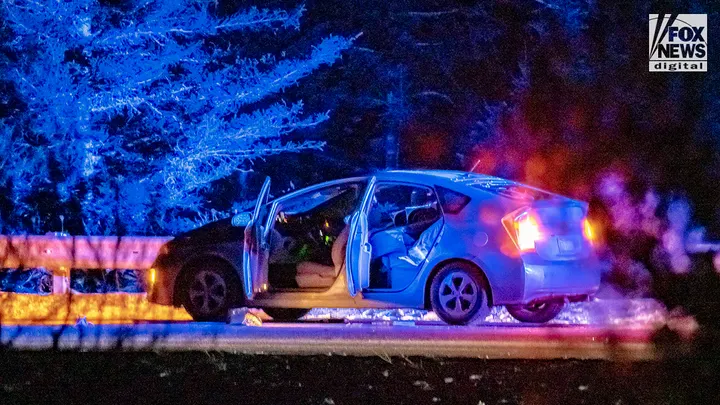
THE GUN HAD A HISTORY
investigators began cataloging what had been recovered after the Vermont shooting.
Among the firearms associated with the scene was a weapon investigator said had previously belonged to Curtis Lind.
The same Curtis Lind whose story we followed in California.
The man who survived the 2022 sword attack.
The man who later became a witness in the criminal case arising from that attack.
And the man prosecutors say was murdered in January 2025.
Now, only days after Lind's death, investigators said one of his firearms had surfaced nearly 3,000 miles away in Vermont.
With people connected to the network investigators were already examining.
California and Vermont were no longer separate chapters.
There was no physical evidence tying the investigations together.
THE CAR HELD MORE
The firearm was not the only thing investigators documented.
Federal court records described an assortment of equipment and supplies connected to Youngblut and Buckholt.
Investigators alleged that their belongings included tactical equipment, electronic devices, ammunition, protective gear, and other items that drew scrutiny.
What had initially looked like two travelers in a Prius was becoming something much harder to explain away as coincidence.
But investigators still had another question:
Who exactly were these people?
Answering that question would lead them away from the highway.
Away from Vermont.
And directly into the strange network sitting underneath everything we've uncovered so far.
As investigators reconstructed the relationships surrounding Youngblut and Bauckholt, familiar names began appearing around the same broader circle.
Jack LaSota.
Michelle Zajko.
Maximilian Snyder.
People whose paths had already intersected with disappearances, violent deaths, criminal investigations, and the events in Vallejo.
But there was something else connecting parts of this network.
Something older than the Vermont shooting.
Older than Curtis Lind's murder.
Older even than the sword attack.
To understand it, we have to go backward.
Back to an experiment.
Back to a group of young people obsessed with rationality, artificial intelligence, decision theory, and the possibility that the human mind itself could be rebuilt.
THE RABBIT HOLE GOES BACK YEARS
The people investigators and journalists would later associate with this network did not begin as characters in a true-crime story.
Their origins lead into online communities devoted to rationalism, artificial intelligence, philosophy, and unconventional theories about human cognition.
And one figure would become especially important to understanding what followed.
Online, she became known as:
Ziz.
Her legal name was Jack LaSota.
And to understand why that name keeps appearing around this story, we need to understand the ideas associated with her—and the community that formed around them.
Because the violence is only one layer of this Rabbit Hole.
Underneath it is an ideology.
And underneath that is where things get truly strange.
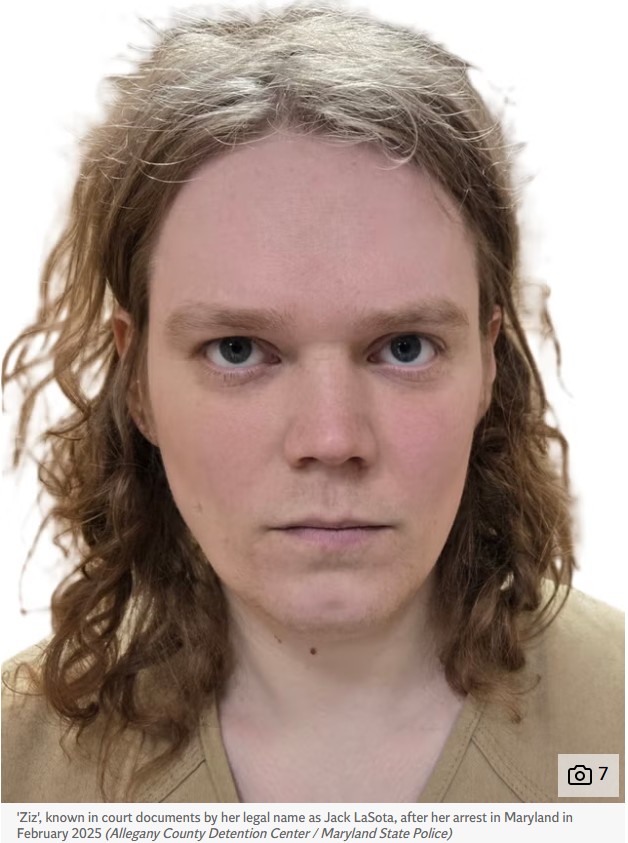
The arrest put a face to the name.
But LaSota was only one piece of what investigators were beginning to unravel.
The Vermont shooting had produced something more tangible than usernames, online posts, or associations.
It produced physical evidence.
One item in particular mattered.
A firearm recovered after the Interstate 91 shooting could be traced beyond Vermont.
Its trail pointed back across the country.
Back toward California.
Back toward people whose names had already surfaced in this story.
And suddenly, incidents separated by thousands of miles were no longer separated by evidence.
THE GUN CONNECTED THE MAP.
Federal investigators began reconstructing how the people surrounding the Vermont shooting were connected.
One relationship immediately stood out.
Teresa Youngblut and Maximilian Snyder had applied for a marriage license in Washington state in November 2024.
Less than two months later, prosecutors say Snyder killed Curtis Lind in California.
Three days after Lind’s death, Youngblut was involved in the deadly encounter on Interstate 91.
Those facts did not, by themselves, establish that the two crimes were coordinated.
But investigators now had a direct personal relationship connecting a defendant in the California murder case to the surviving defendant in the Vermont case.
The map was getting smaller.
WHAT WAS IN THE PRIUS?
After the shooting, investigators searched the vehicle Youngblut and Bauckholt had been traveling in.
Federal court filings described firearms, ammunition, electronic equipment, tactical gear and other material recovered during the investigation.
Authorities also examined the pair’s movements before the shooting—including their contact with Border Patrol agents in the days leading up to January 20.
The Prius was no longer simply the location of a deadly traffic stop.
It had become an evidence container.
And every item inside offered investigators another route into the people, movements and relationships surrounding the case.
THEN THEY STARTED FOLLOWING THE MONEY.
Guns could connect people.
Relationships could connect people.
But investigators had another trail available to them:
money.
Purchases, travel, vehicles, property and financial transactions could potentially reveal relationships that online aliases concealed.
And as investigators widened their view beyond Interstate 91, the Vermont shooting began intersecting with a much larger federal investigation.
What happened next would pull another person into the center of the story—
someone whose name had already surfaced around the Pennsylvania branch of this Rabbit Hole.
MICHELLE ZAJKO
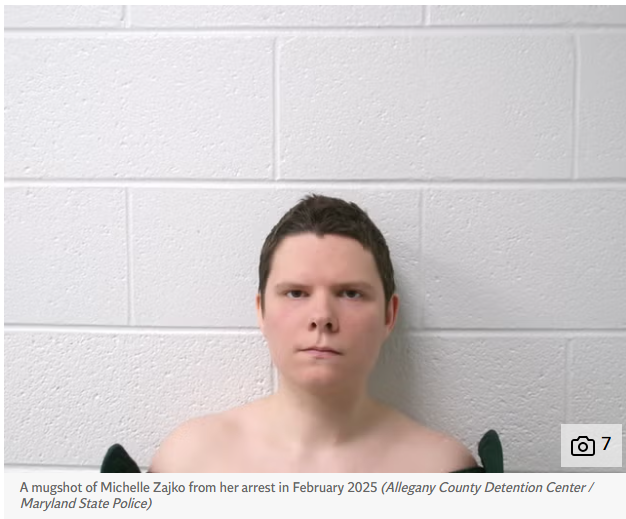
Michelle Zajko was no longer just a name attached to the Pennsylvania branch of this story.
Investigators had begun encountering the same small circle of people across separate cases, separate states, and separate investigations.
California had given them Curtis Lind.
Pennsylvania had given them Richard and Rita Zajko.
Vermont had given them Teresa Youngblut, Felix Bauckholt, a dead Border Patrol agent—and a vehicle full of evidence.
Now the question was becoming harder to ignore:
How many of these connections were coincidence, and how many were part of something investigators had not yet fully mapped?
THE VERMONT CASE GOT BIGGER.
The original federal case against Teresa Youngblut began with allegations that she used and discharged a firearm during the January 20 traffic stop.
Then the stakes increased dramatically.
In August 2025, a federal grand jury returned a superseding indictment charging Youngblut with the murder of Border Patrol Agent David Maland, assaulting two additional agents with a deadly weapon, and related firearms offenses.
The Justice Department also announced that prosecutors had filed notice of their intent to seek the death penalty.
Youngblut remains presumed innocent unless proven guilty beyond a reasonable doubt.
Evidence
THE FEDERAL MURDER INDICTMENT
On August 14, 2025, federal prosecutors announced a four-count superseding indictment charging Teresa Youngblut with the murder of U.S. Border Patrol Agent David Maland, assaulting two additional agents with a deadly weapon, and related firearms offenses.
The indictment contains allegations, not findings of guilt.
Source: https://www.justice.gov/usao-vt/pr/seattle-woman-indicted-murder-us-border-patrol-agent-vermont?utm_source
documented
BUT VERMONT WAS ONLY ONE INVESTIGATION.
By this point, the reader can finally see the shape investigators were confronting.
A landlord who survived one violent encounter in California was later murdered.
A woman connected to this circle was accused of killing a federal agent in Vermont.
Two parents had been found shot to death in Pennsylvania.
And people whose names surfaced around these events were later being arrested hundreds of miles away in Maryland.
But proximity is not proof. Association is not guilt.
The cases still had different defendants, different evidence, and different unanswered questions.
What made the story extraordinary was not that authorities had proven one enormous conspiracy.
They hadn't.
It was that documented connections between people in these separate investigations kept appearing.
AND WE HAVEN'T OPENED PENNSYLVANIA YET.
For more than three years, the killings of Richard and Rita Zajko remained unresolved.
Then, on June 24, 2026, the investigation changed.
Pennsylvania authorities charged their daughter, Michelle Zajko, with first-degree murder, conspiracy and related offenses in connection with the killings.
Prosecutors said the case had been built piece by piece from evidence gathered over several years—including surveillance video, cellphone data and ballistics.
Zajko has denied killing her parents.
And the charges are allegations. No conviction has established her guilt.
But investigators had finally put a defendant at the center of the Pennsylvania branch of the map.
Evidence
THE BALLISTICS
Pennsylvania prosecutors said shell casings recovered from Richard and Rita Zajko's home were linked through ballistics evidence to ammunition associated with Michelle Zajko's Vermont residence and a firing range in her backyard.
Authorities said this evidence was one part of the case that led to the 2026 charges.
The allegation has not yet been proven at trial.
reported
THEN CAME THE DOORBELL CAMERA.
A neighbor's doorbell camera captured a vehicle arriving outside the Zajko home on December 31, 2022.
Prosecutors said two people got out.
The recording captured one voice calling out:
“Mom!”
Authorities emphasized a simple fact:
Richard and Rita Zajko had one child.
Michelle.
Prosecutors allege she was inside the home and had arranged her parents' deaths, while also saying they believe she did not act alone.
The identity of any alleged co-conspirator remained unresolved publicly when the charges were announced.
AND THEN THERE WAS THE GUN.
The Pennsylvania investigation was no longer the only place Michelle Zajko's name appeared alongside firearms evidence.
Reporting on the 2026 charges revealed another allegation with enormous implications for the map we've been building:
Zajko is also accused of providing the firearm used in the Vermont shooting that killed Border Patrol Agent David Maland.
That allegation does not establish that Zajko participated in the Vermont shooting itself.
But if you have followed this Rabbit Hole from California to Pennsylvania to Interstate 91, you can see why investigators were interested.
The evidence was beginning to cross state lines even when the crimes did not.
THIS IS WHERE THE FREE TRAIL ENDS.
Up to this point, we've stayed with the connections visible from the surface:
the people,
the deaths,
the arrests,
the relationships,
and the evidence investigators say connects pieces of the map.
But we still haven't answered the question underneath all of it:
How did these people find each other—and what happened after they did?
Because buried beneath the criminal cases is another trail.
Blog posts.
Private relationships.
Shared houses.
Vehicles.
Firearms.
Money.
Cross-country movement.
And a collection of ideas that existed online before most of these names ever appeared in homicide investigations.
That's where the deeper Rabbit Hole begins.
FOLLOW THE NETWORK.
Level Cliffhanger
Three states. Multiple deaths. A murdered federal agent. A landlord who survived one attack—only to be killed more than two years later. And the same small circle of names kept appearing around the investigations. But the map only shows WHERE they appeared. It doesn't explain WHY they were connected. To understand that, we have to go beneath the criminal cases. Into the relationships investigators reconstructed. Into the weapons. Into the money. Into the places they lived. And back into the online world where some of them first found one another. Because once you stop looking at these deaths as separate headlines... a much stranger pattern begins to emerge. THE FREE TRAIL ENDS HERE. THE NETWORK DOESN'T.
The rabbit hole continues
Descend to Level 4 →